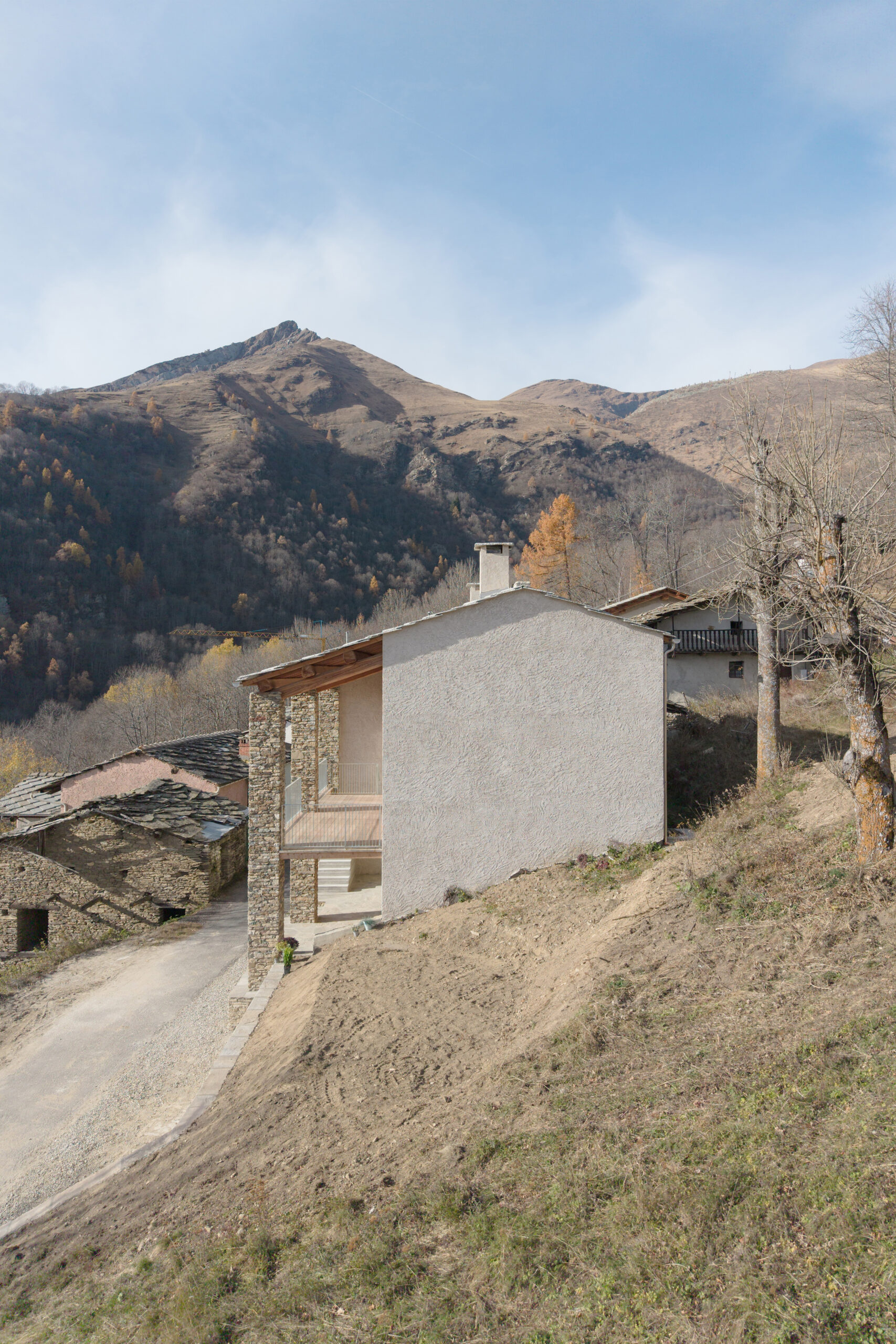
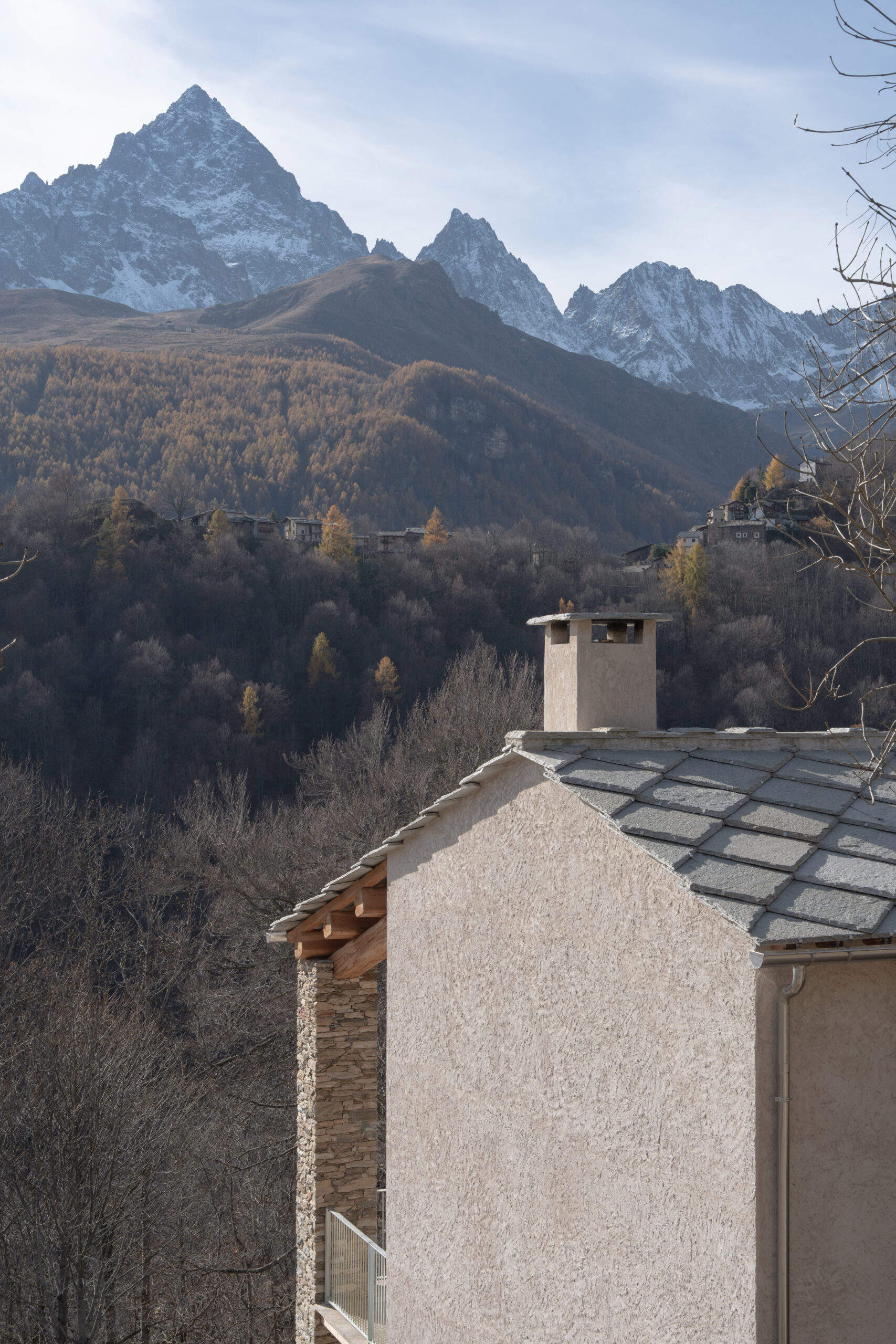
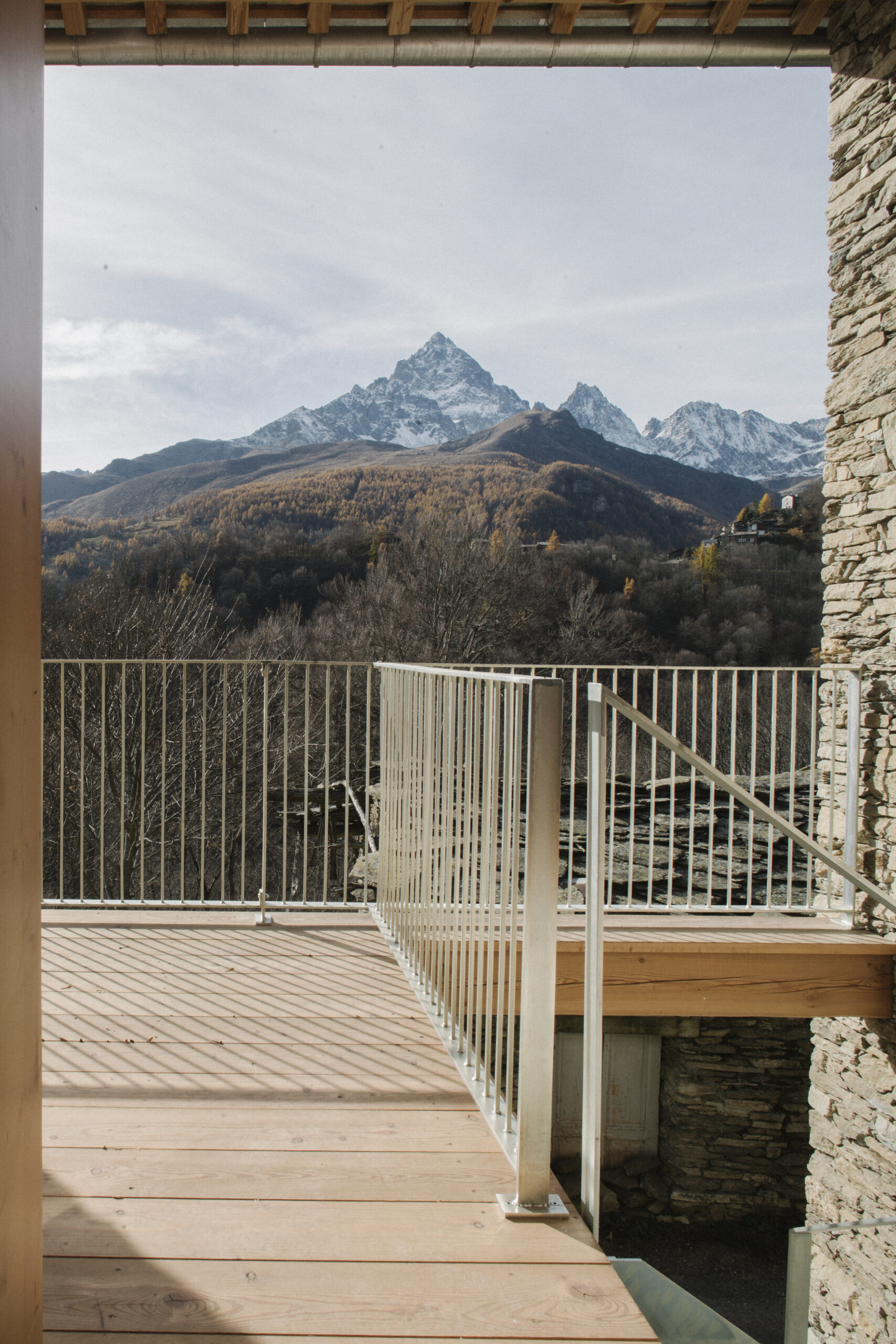
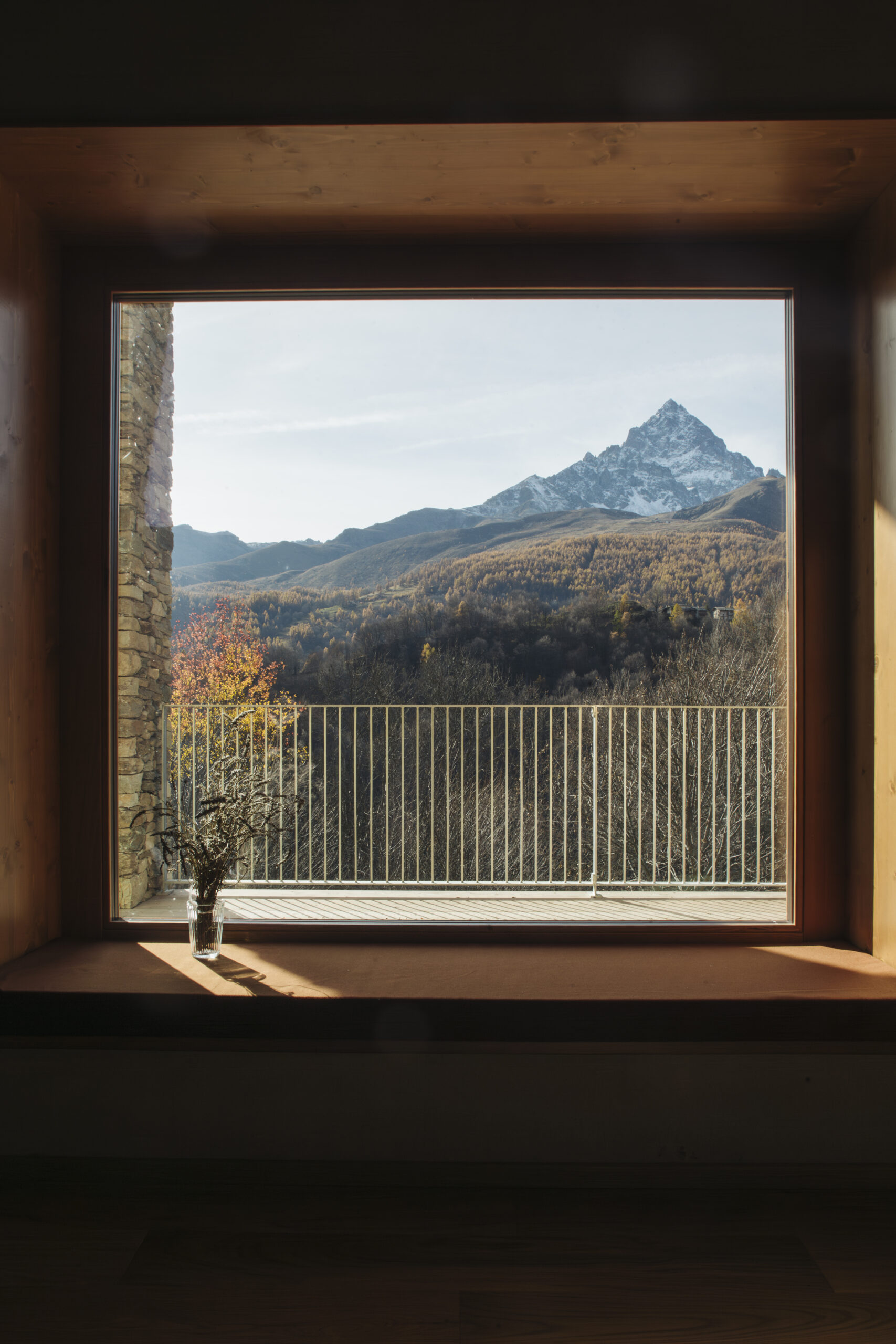
The project concerns the renovation of a rural agricultural building located in the hamlet of Bertolini, in the Municipality of Crissolo, in the upper Po Valley, a short distance from the source of the Po River at Pian del Re, on the slopes of Monviso. A geographical and symbolic setting of strong character, where the relationship with the Alpine landscape—and in particular with the iconic presence of Monviso—becomes a defining element of the architectural project.
The “casa de piatra” stems from the desire to engage with an existing building strongly characterized by its typological and construction features, embracing it not as a formal constraint but as a generative matrix for the design. There are two guiding principles: on the one hand, respect for the original structure and its rootedness in the local vernacular tradition; on the other, the reinterpretation of the building in light of contemporary living requirements, capable of incorporating a contemplative and introspective relationship with the landscape.
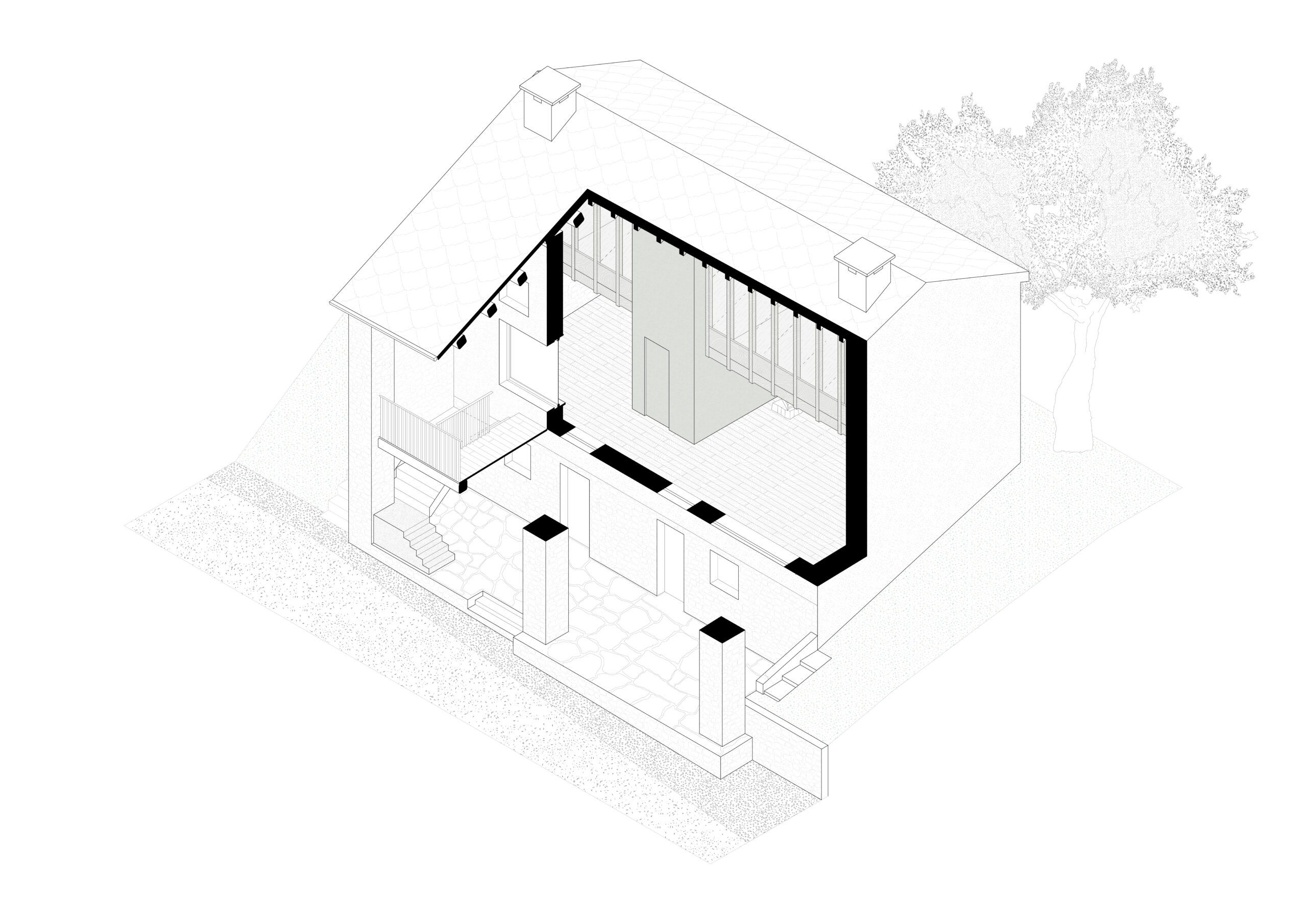
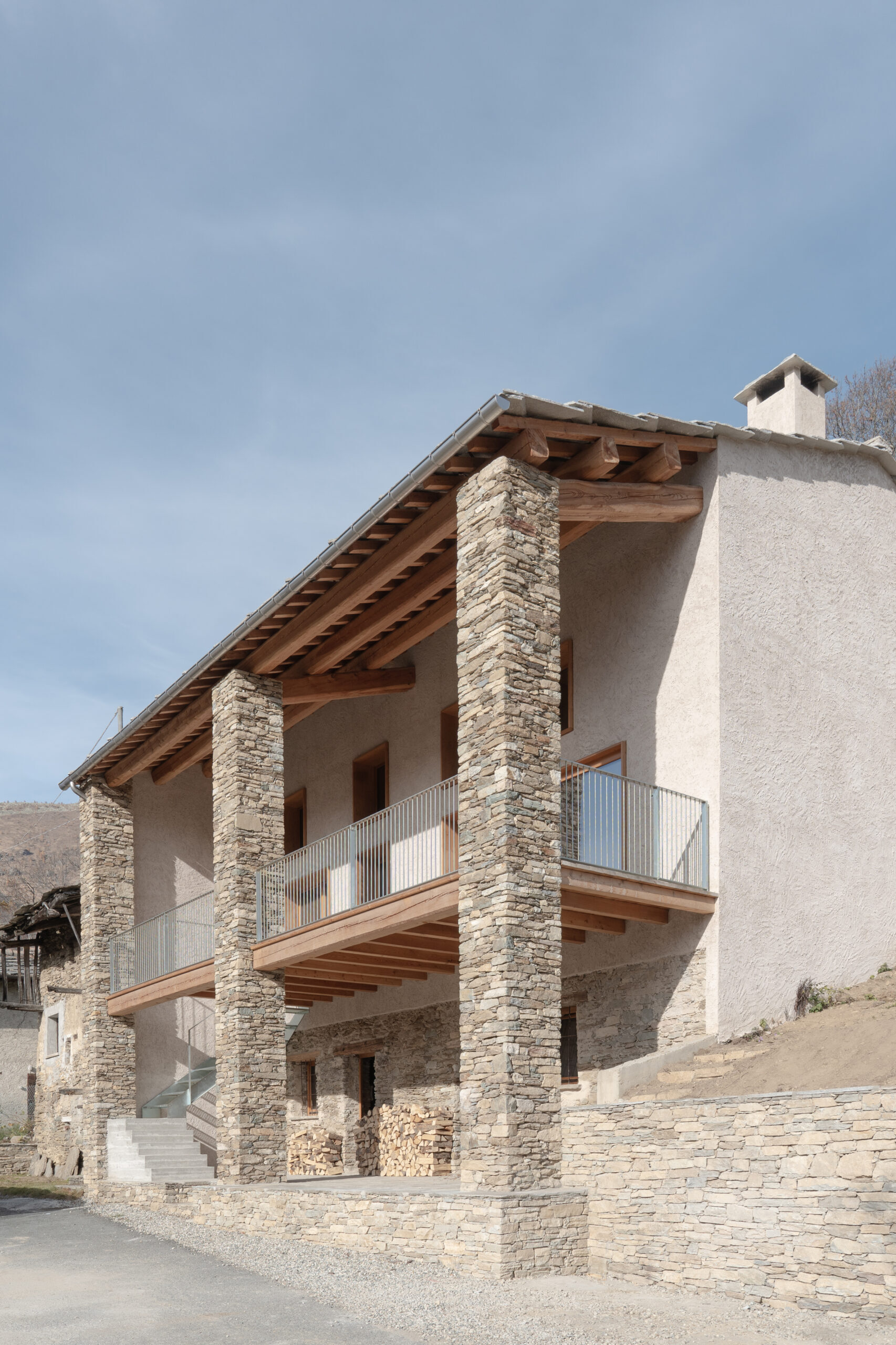
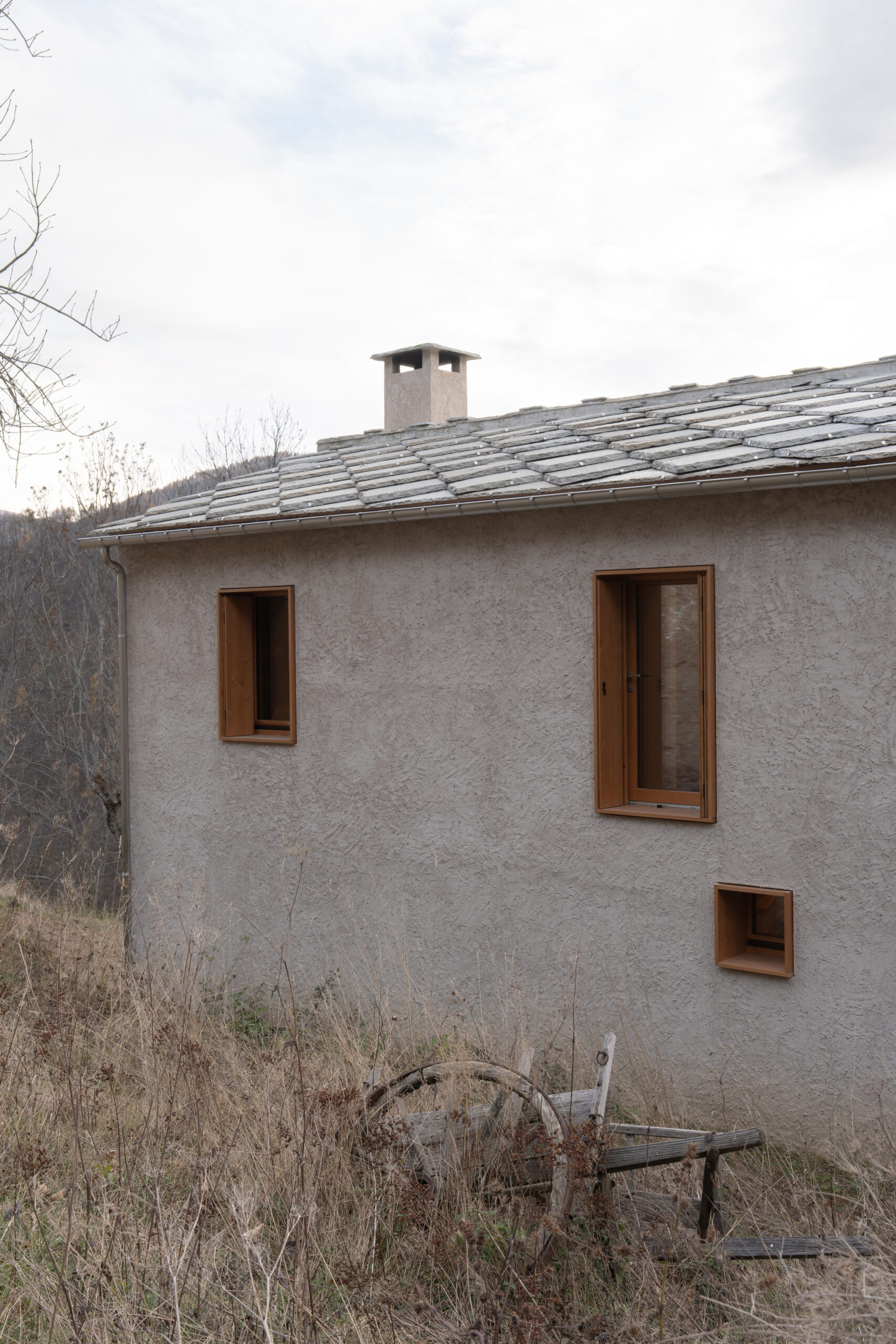
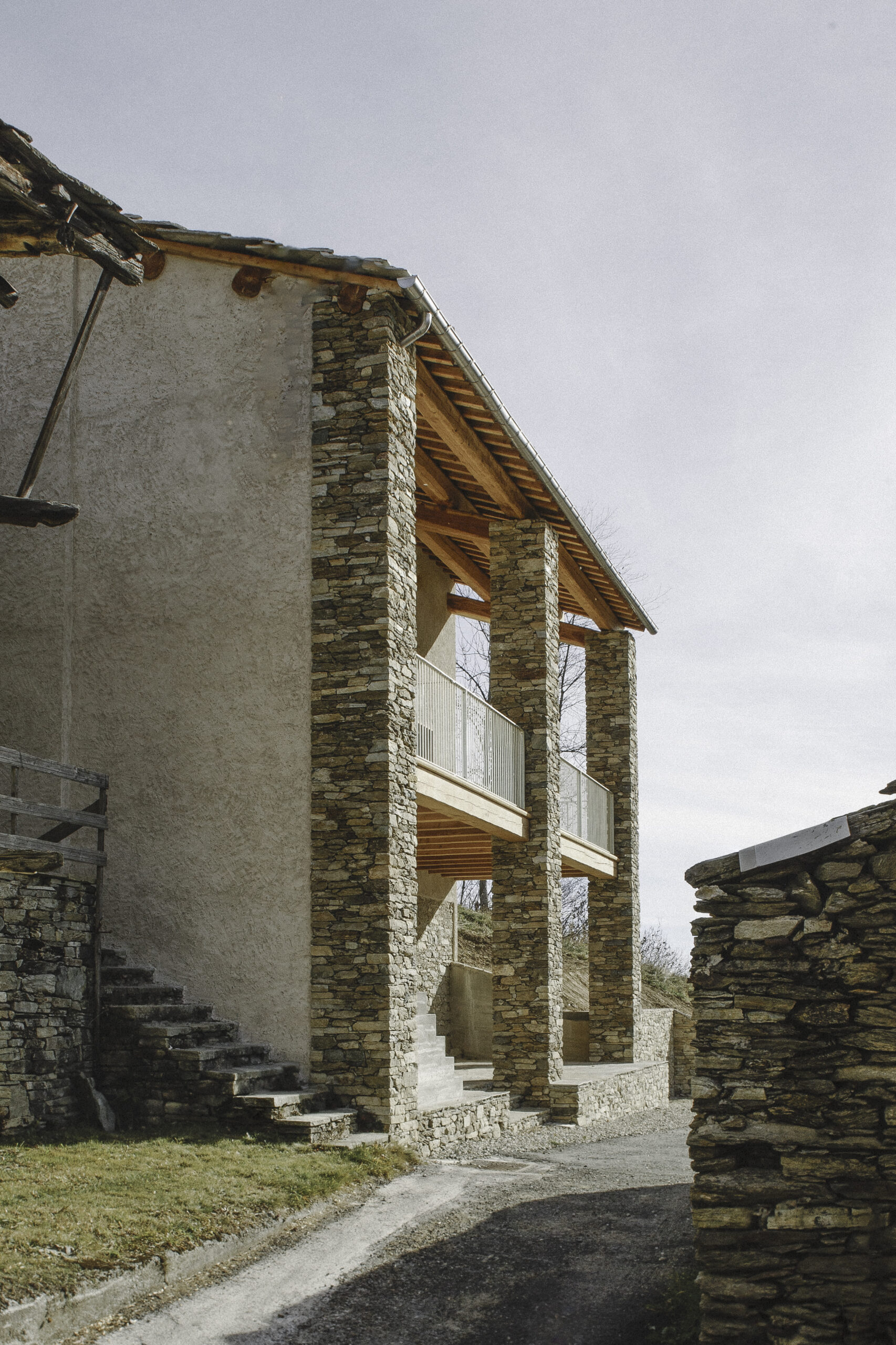
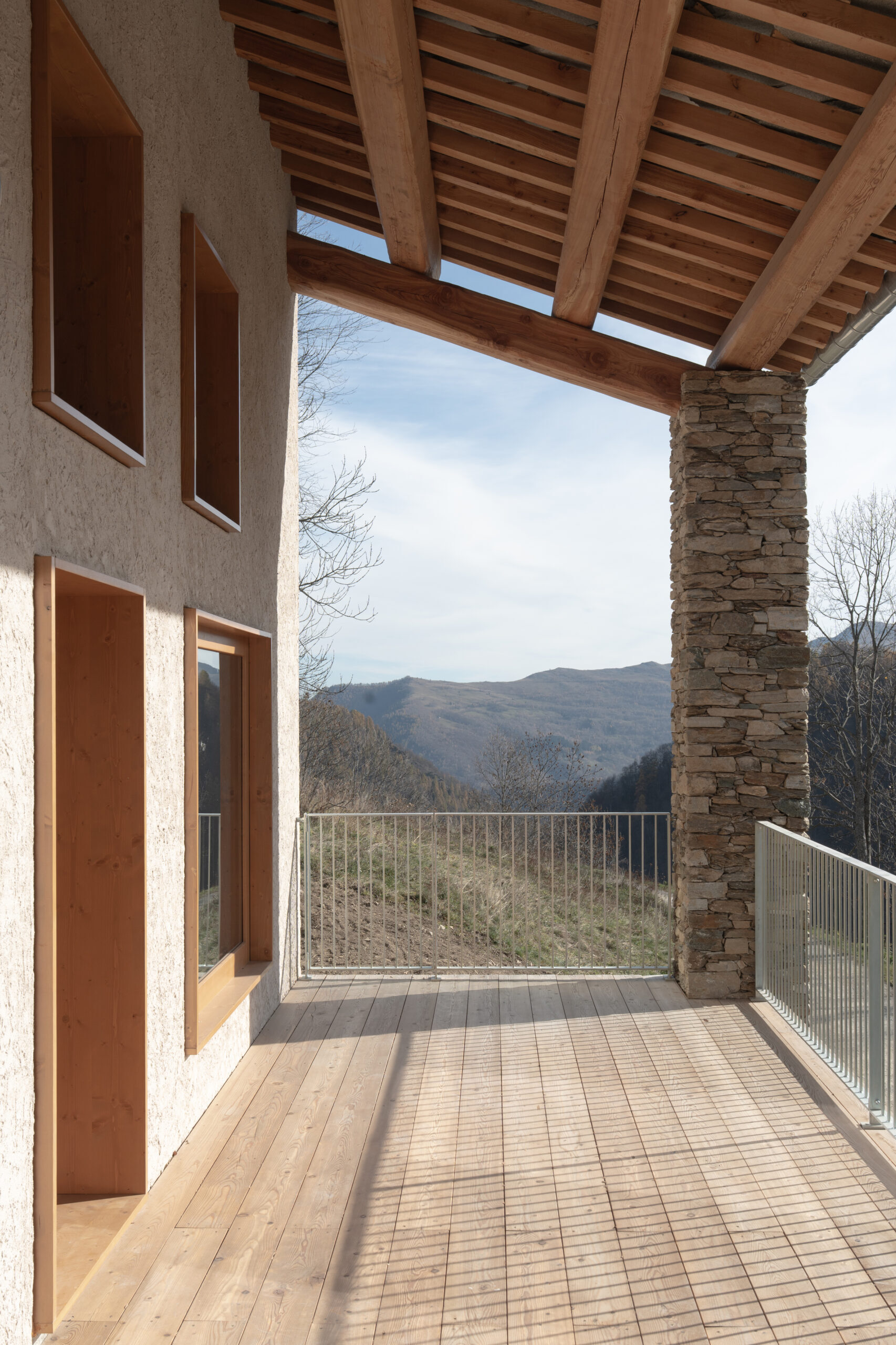
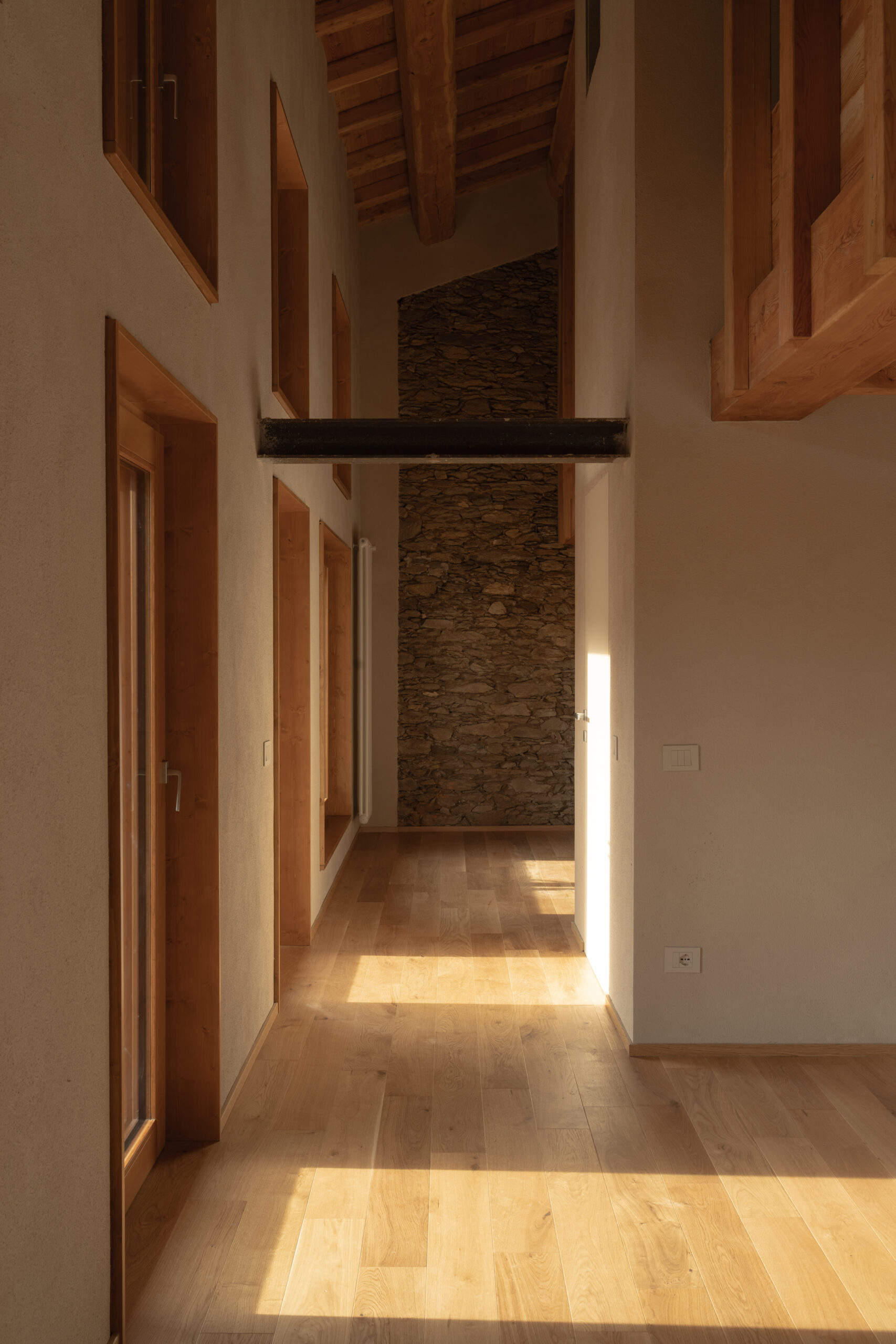
On the exterior, the project preserves the existing outline, reinterpreting its spatial devices in a contemporary key. A central element is the large loggia on the southern façade, oriented toward Monviso, which functions as a mediating space between interior and exterior, between private life and the collective dimension of the landscape. A precise process of recomposition of the southern façade led to the enlargement of some openings, without changing their overall number. The openings thus become true optical devices, capable of framing ever-changing portions of the Alpine landscape and establishing a selective and calibrated relationship with the surrounding environment.
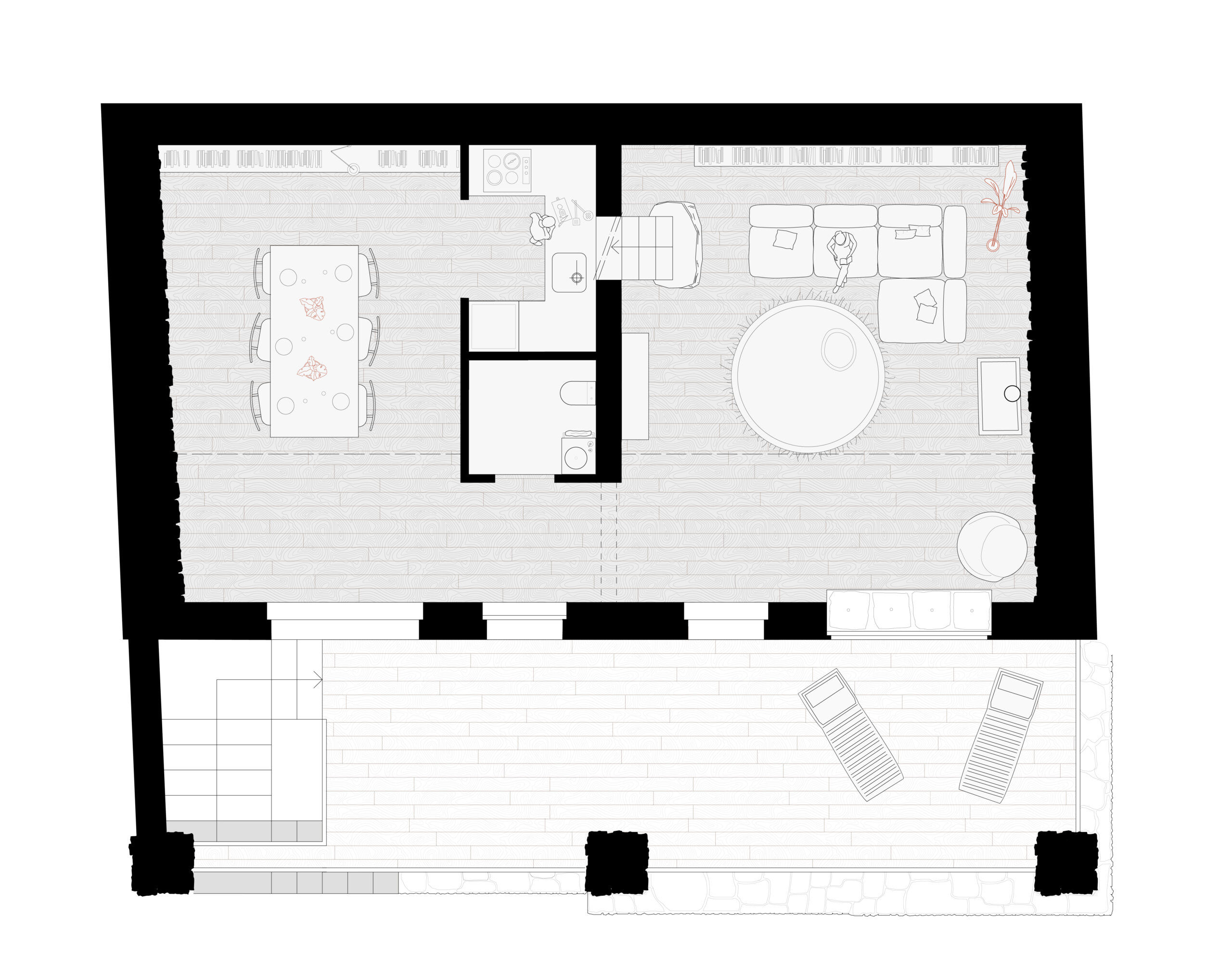
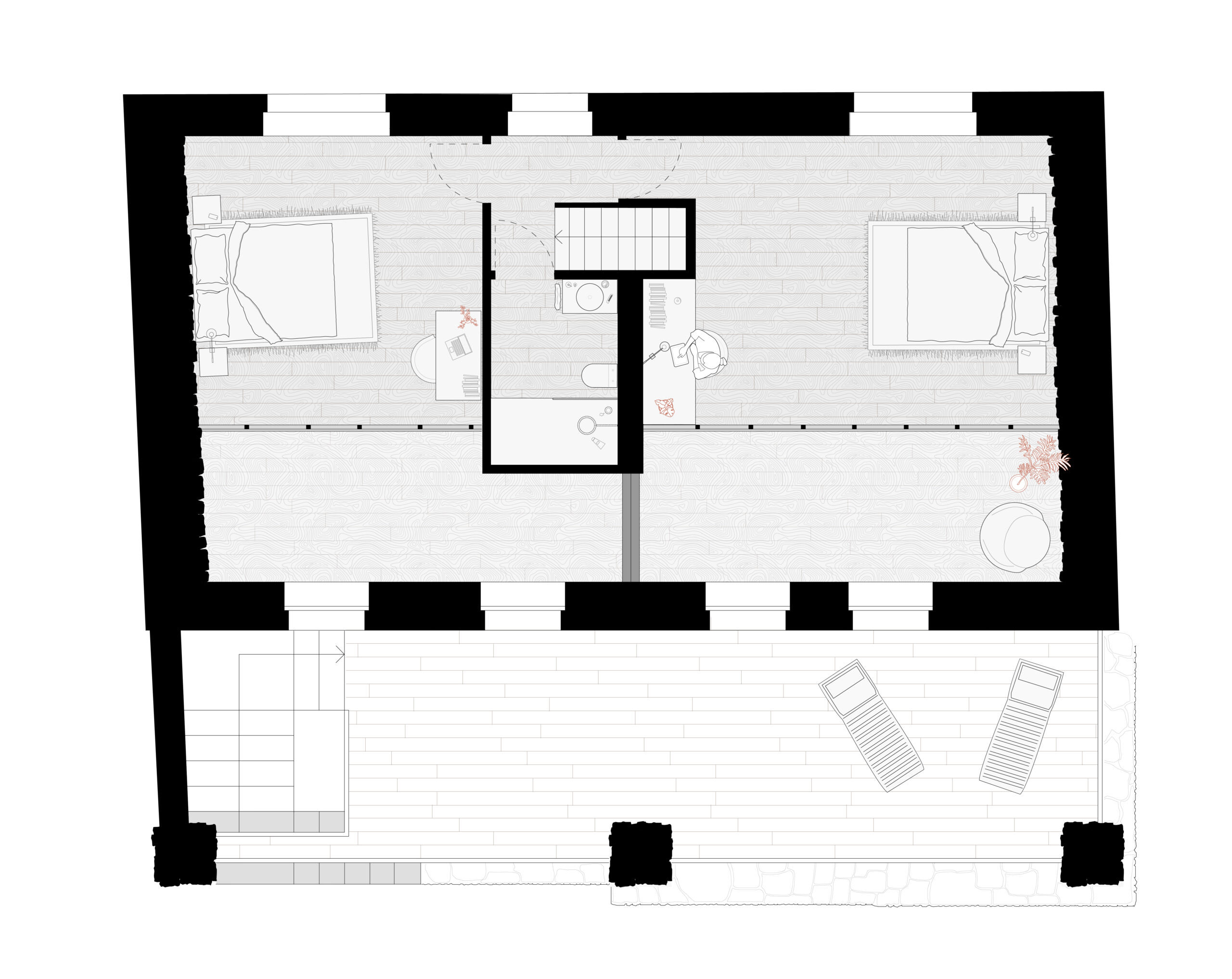
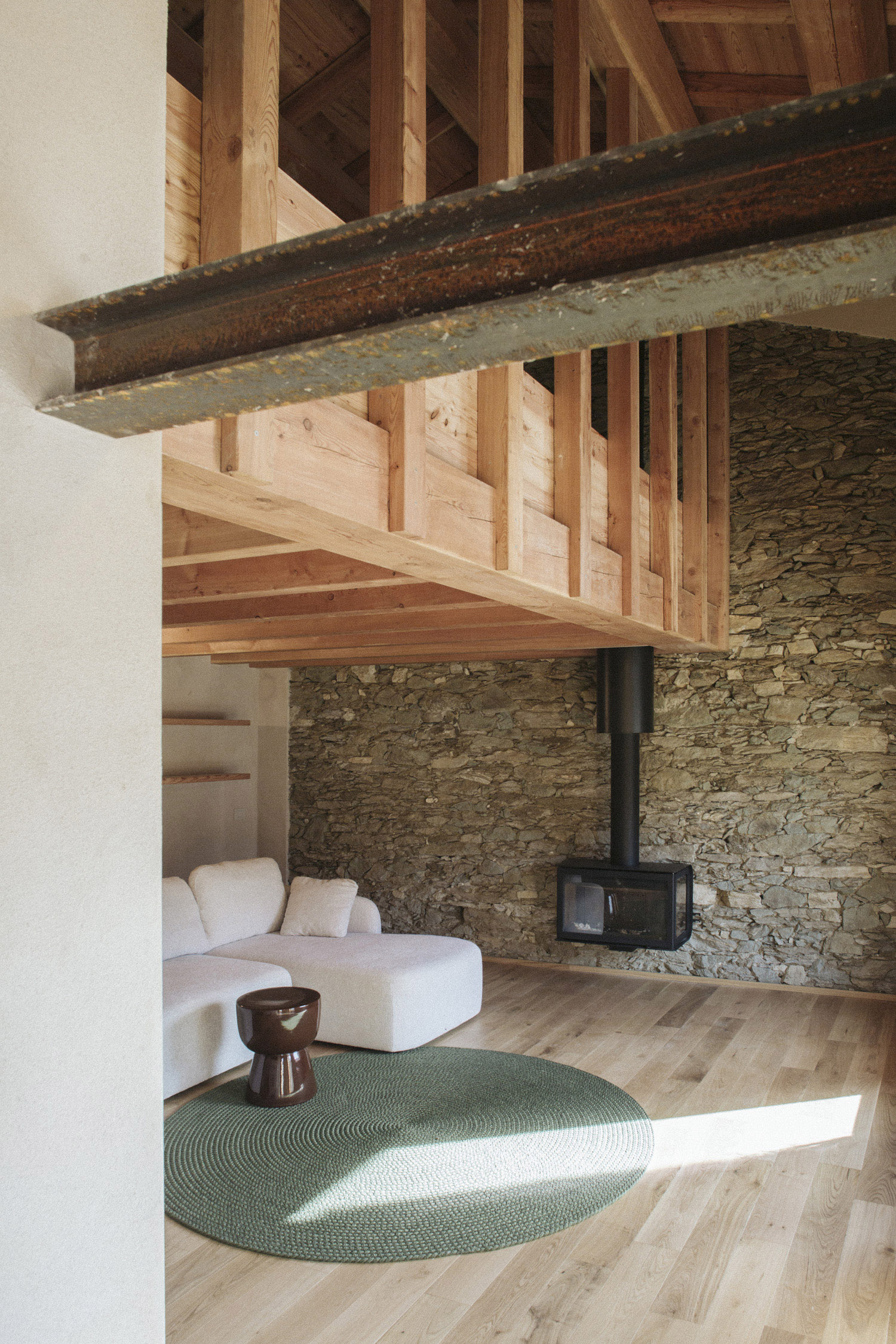
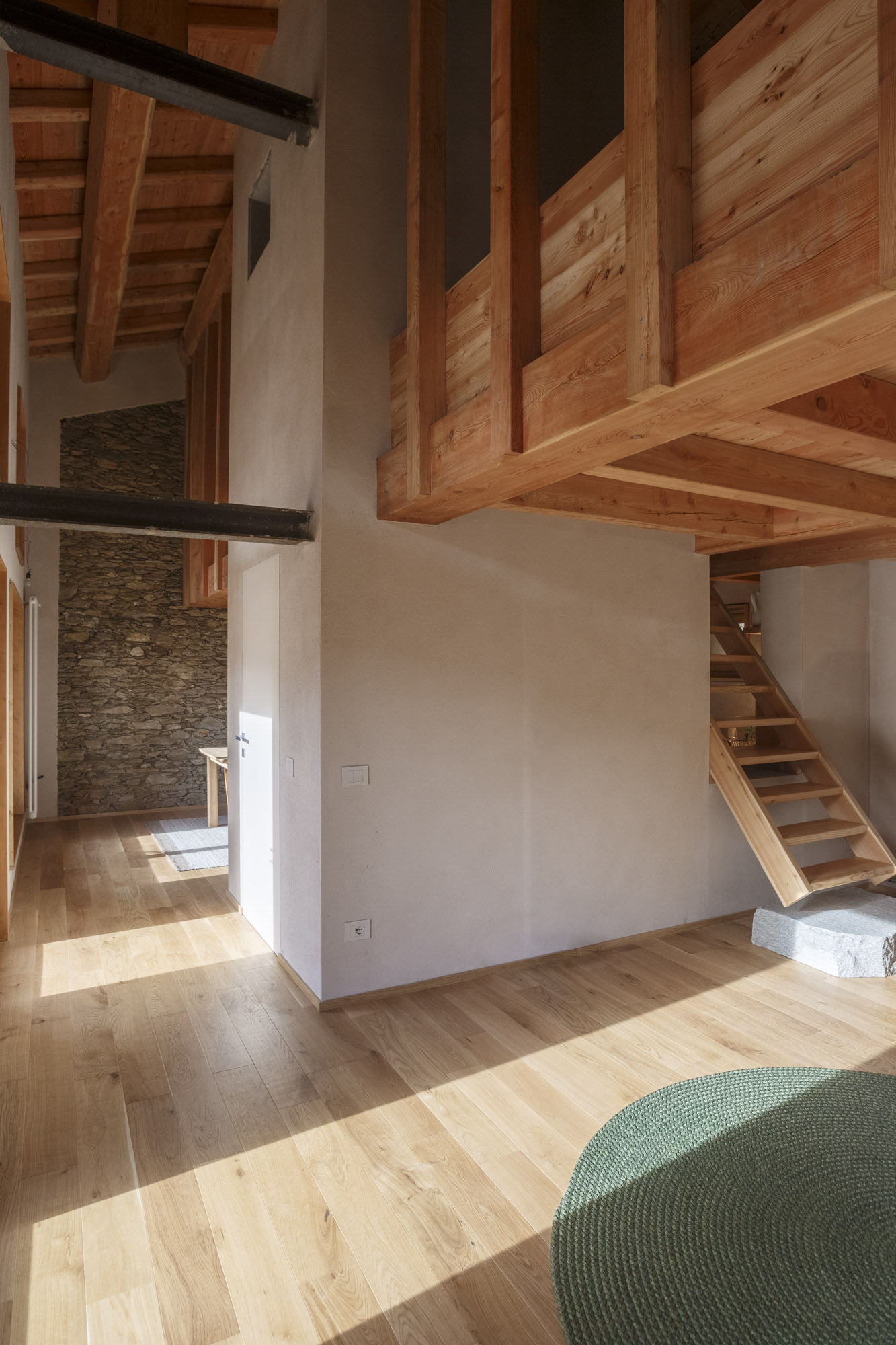
The interior spaces are arranged over two levels: the living area on the loggia level and the sleeping area on the upper level. The floor plan organization is governed by two main themes. The first is represented by a compact service volume that contains all secondary spaces—kitchen, bathrooms, staircase, and circulation areas—freeing up the remainder of the plan, which is reserved exclusively for the main living spaces. The second theme, more evident in section, is that of the “interior–exterior” relationship. A double-height space is inserted between the dwelling and the loggia, transforming the façade into an actual internal screen and overturning the traditional perception of enclosure and openness. This circulation space evokes the narrow streets of Alpine villages, generating a kind of internal landscape. The bedrooms overlooking it take on the character of autonomous volumes, arranged along an internal “street,” giving shape to an essential yet spatially articulated volumetric composition.
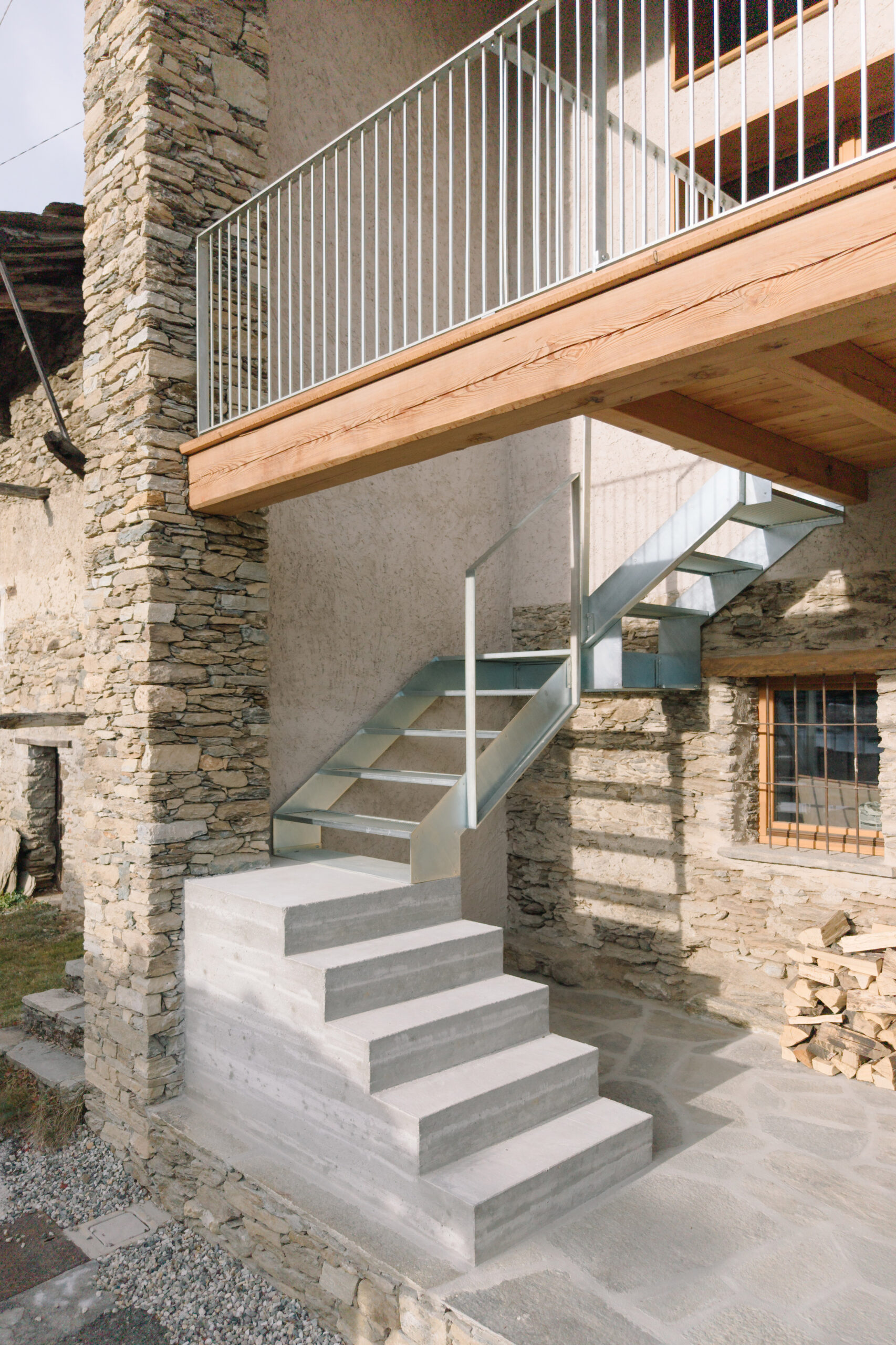
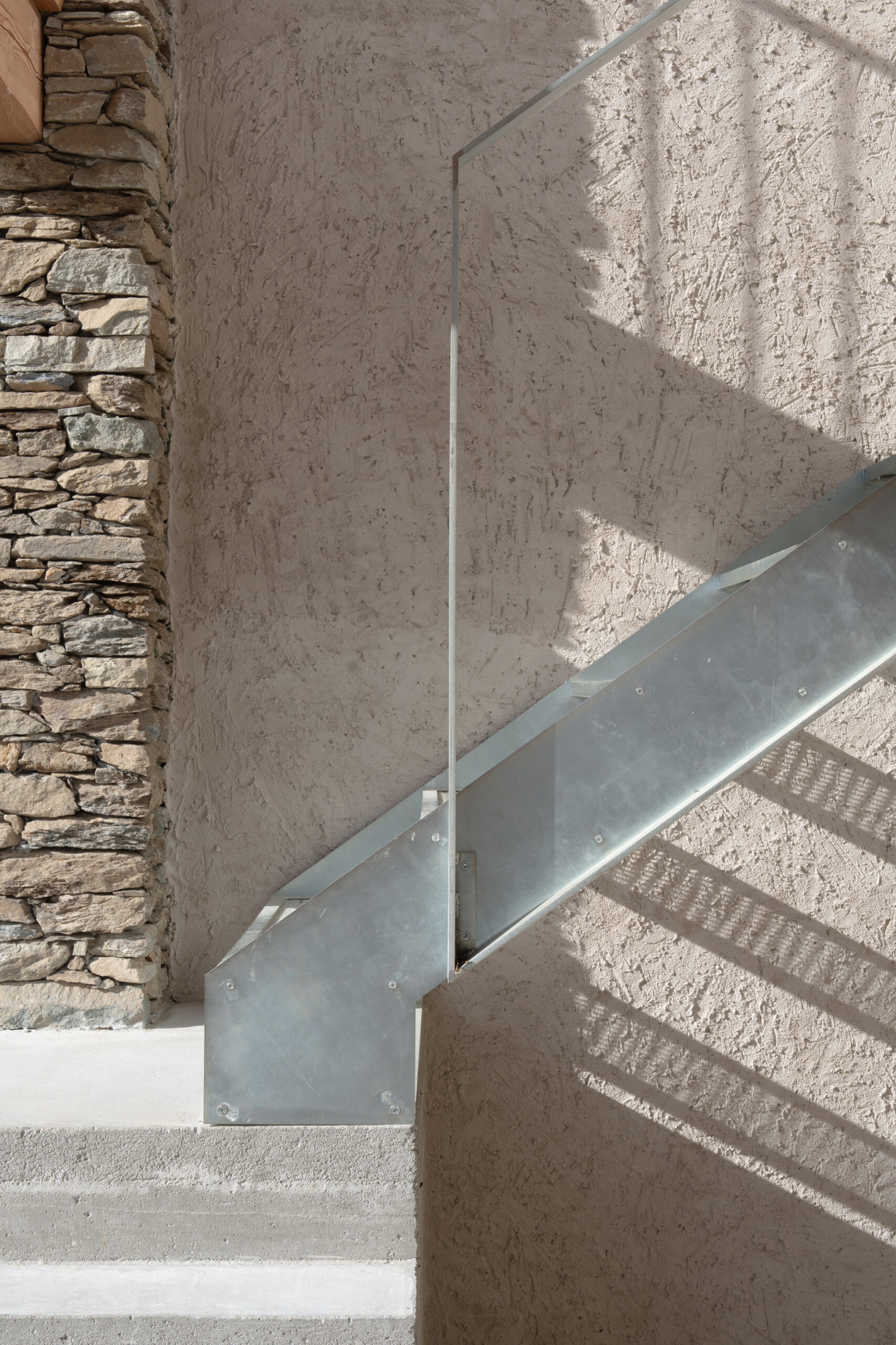
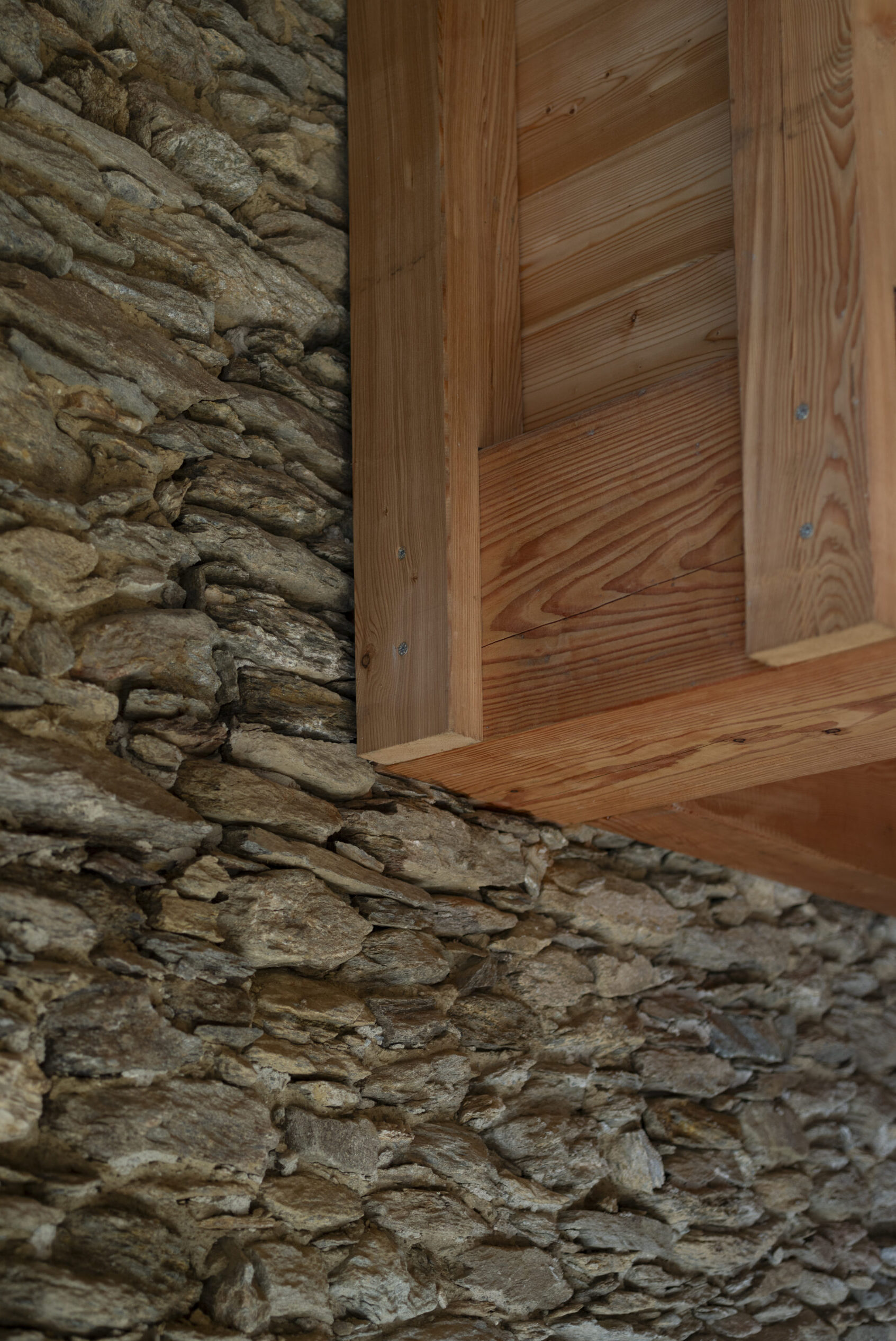
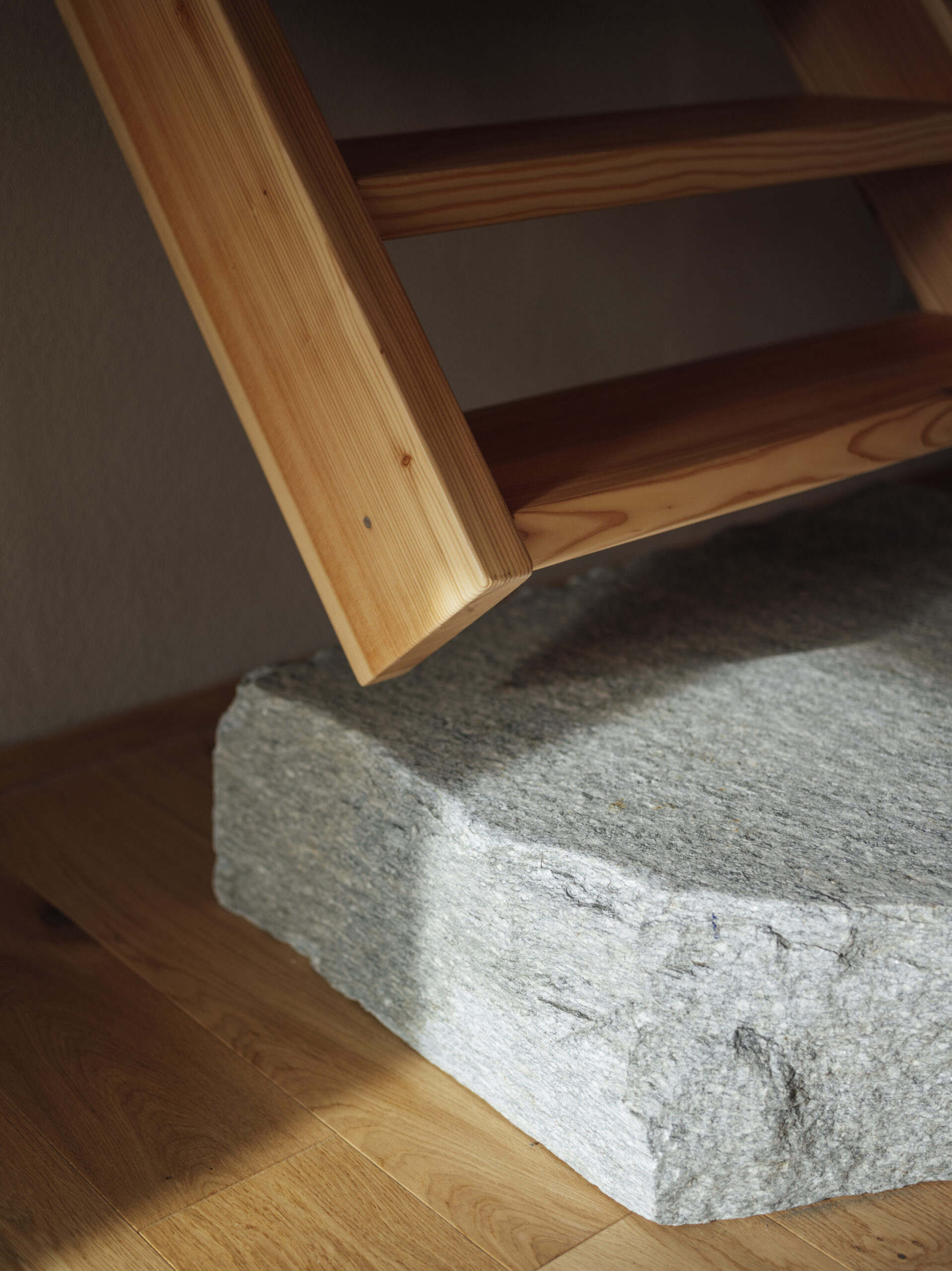
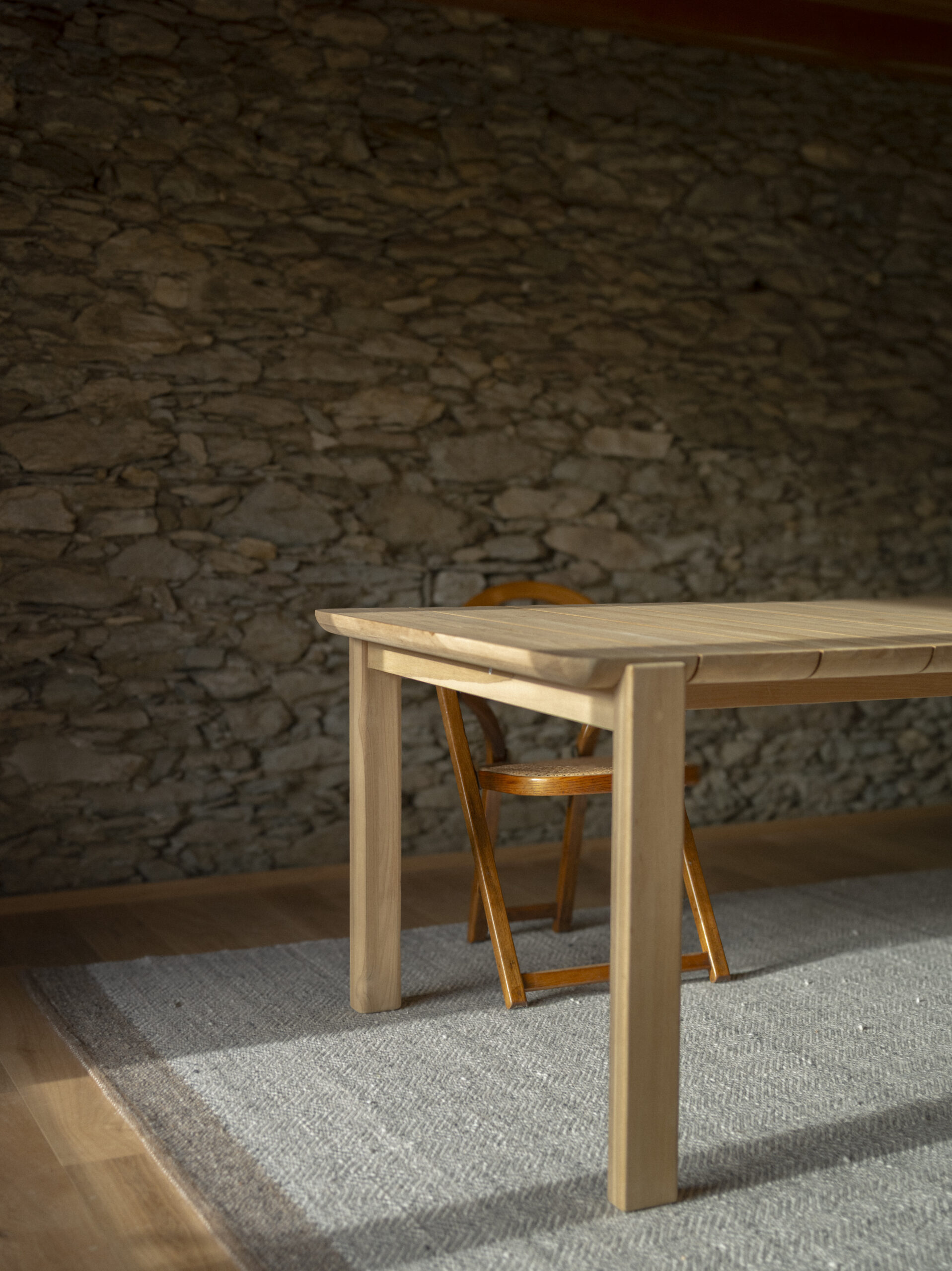
Finally, a fundamental role is assigned to materials, selected with particular attention to their provenance and their ability to ensure continuity with the original construction. The stone of the three pillars on the street façade comes from the recovery of the existing structure, just as the original roofing slates have been reused to create the flooring of the basement level. A choice that strengthens the link between the project, construction memory, and territory, giving the building a new life without breaking its connection to its own history, strongly characterized in typological and construction terms, and embraced not as a formal constraint but as a design matrix.
Location
Crissolo
Year
2025
Typology
Residential
Area
87 mq
Status
Completed
Ph
Majlend Bramo, Marco Popescu